

From cameras and outdoor leisure equipment to everyday consumer goods, the products around us contain countless precision components measuring just a few millimeters. Okamoto Engineering Vietnam Co., Ltd. specializes in precision machining using automatic lathes.
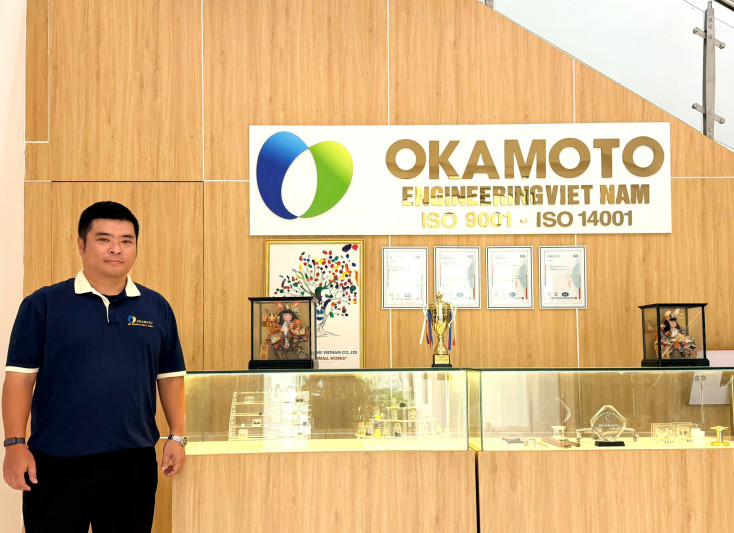
From cameras and outdoor leisure equipment to everyday consumer goods, the products around us contain countless precision components measuring just a few millimeters. Okamoto Engineering Vietnam Co., Ltd. specializes in precision machining using automatic lathes. The president of its Japanese parent company, who previously held a senior position at a cooperative that accepted technical interns, wanted to create a place in Vietnam where returning trainees could put the skills they had acquired in Japan to work. He established the company in 2013. Starting with plastic machining, the company has steadily broadened its capabilities and the range of work it handles in response to customer needs.
Tiny Precision Components That Shape the Feel of a Camera
Okamoto Engineering Vietnam began by machining plastic components for optical equipment. One of its core products today is a small plastic roller fitted inside camera zoom lenses. Although hidden from view, this tiny component plays an essential role in ensuring that the zoom ring turns smoothly.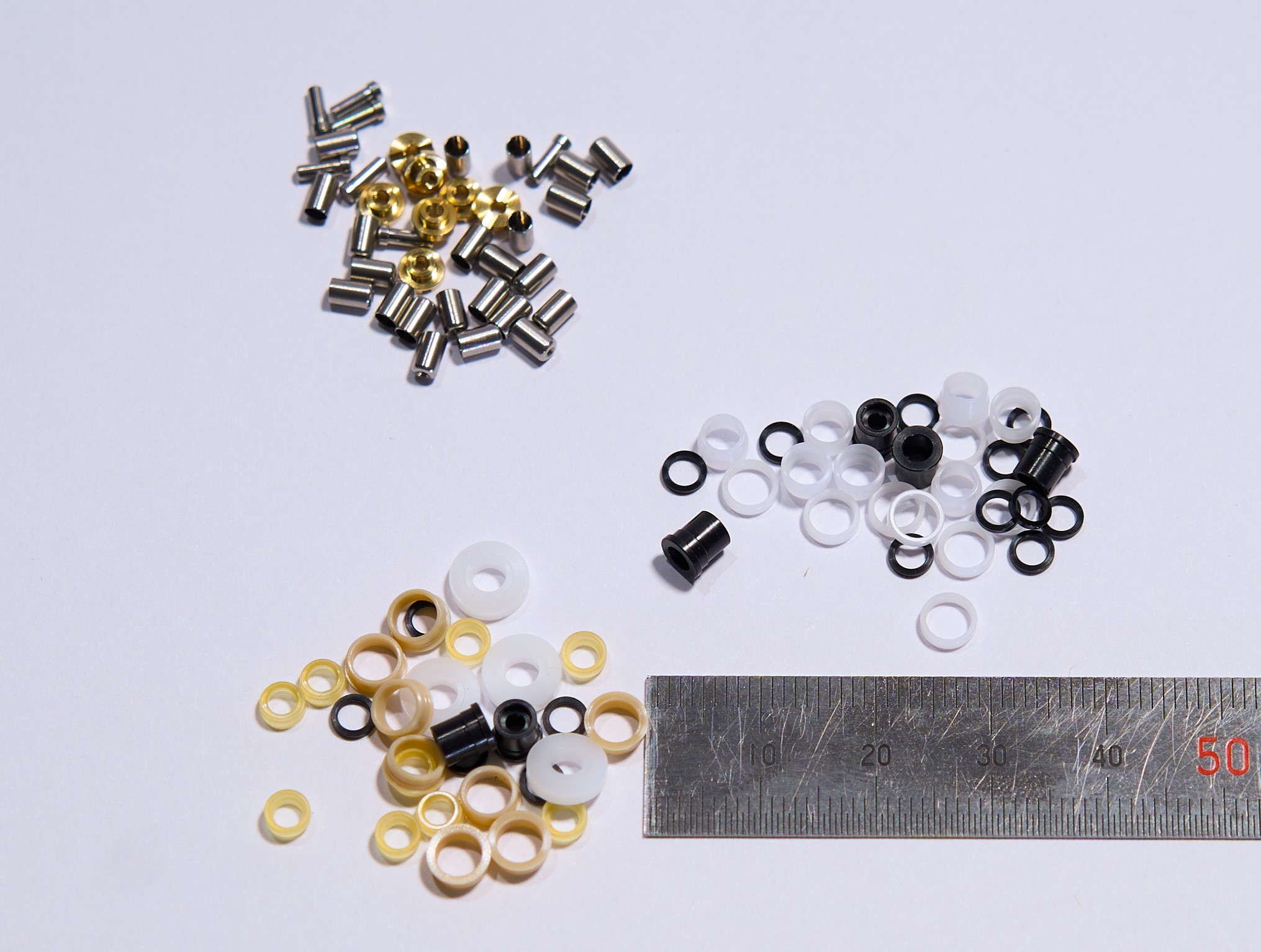
The roller moves along a cam groove inside the lens barrel. If it is even slightly oversized, the zoom becomes stiff; if it is undersized, play develops in the mechanism. Dimensions must therefore be controlled at the micron level for the lens to perform as intended.
“For the most demanding parts, we control tolerances to ±5 microns,” Okamoto explains. The material used is POM, an engineering plastic whose dimensions are sensitive to temperature changes. Producing these parts in volume with consistent precision requires advanced machining expertise and rigorous quality control. The company supplies these critical components while meeting the stringent quality standards of global optical equipment manufacturers.
Building on this foundation in plastic components, the company has refined its expertise in machining very small parts over many years. It now handles metals as well as plastics, producing a wide variety of high-precision components in Vietnam, primarily by machining round bar stock on automatic lathes. Its machining capacity extends up to Ø42, while it also focuses on exceptionally small parts of Ø4 and below. True to its slogan, “Big Dreams In Small Works,” the company continues to take on the challenges of precision machining, where smaller dimensions mean greater difficulty.
Expanding Capabilities by Meeting Customer Expectations
As business grew beyond its origins in plastic machining, customers began asking new questions: “Could you machine this in metal?” “Could you handle the polishing as well?” “Could you also take on stamping?”
Each time, Okamoto sought a way to turn the request into reality.
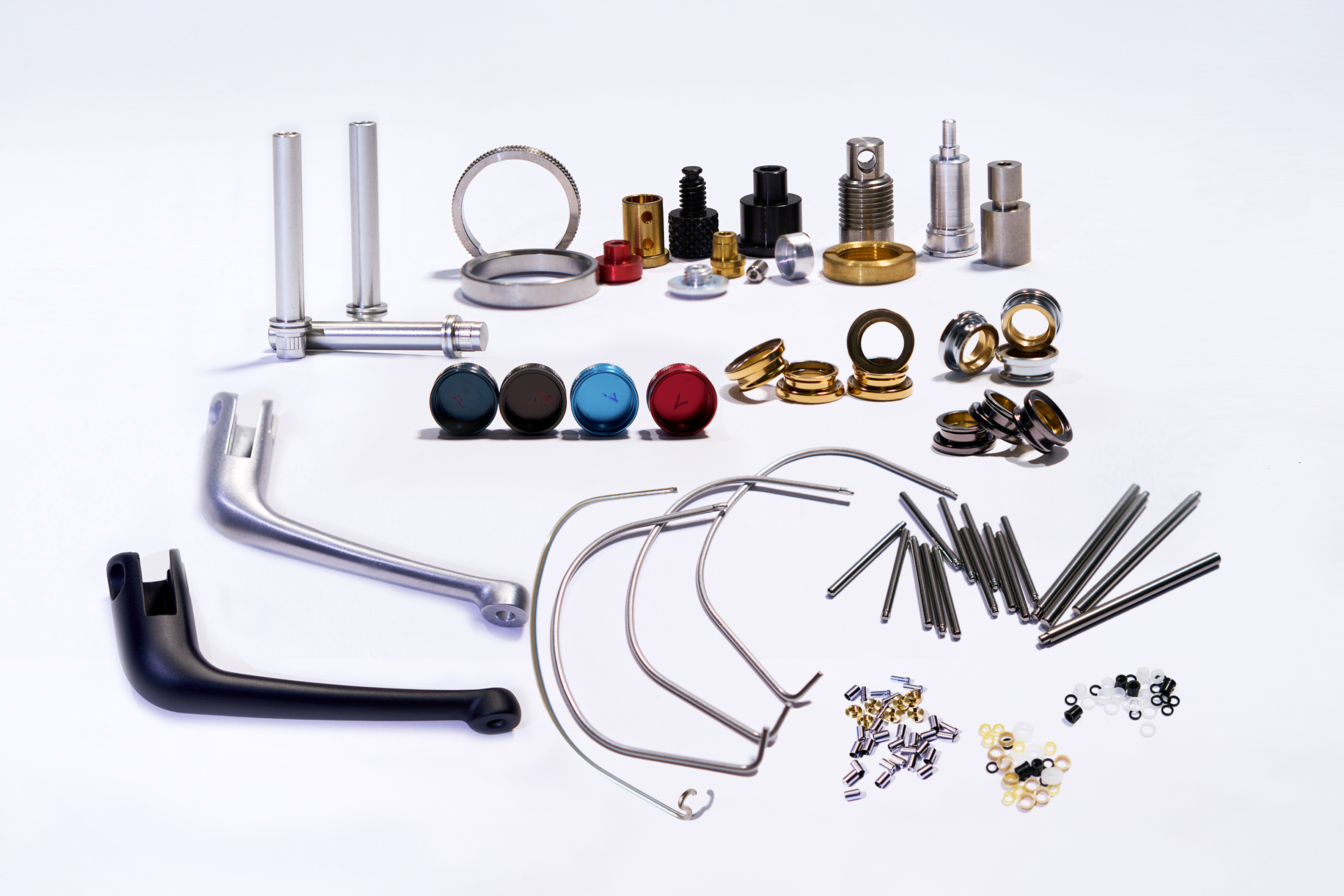
The company added metal machining, then expanded into polishing, stamping, and wire forming. To meet demand for very high-volume production, it also introduced Swiss-made escomatic cam-controlled automatic lathes. This involved more than installing equipment: Okamoto traveled to Switzerland with young Vietnamese engineers to learn the machining techniques on site and open up a new field of production.
“My sole motivation was to live up to our customers’ expectations.”
That commitment also drove the company into unfamiliar territory. Specialized components used in harsh outdoor environments required surface treatments it had not handled before, including anodizing and ion plating. Working with partner companies, it established the necessary processing methods, assigned approximately 30 inspectors, and invested heavily in their training. It also built quality standards and inspection systems from the ground up to meet customer requirements.
Another challenge involved stainless steel washers just 0.02 mm thick. The customer had struggled to find a company capable of producing them.
“Everyone we ask turns us down. Is there any way you could make this work?”
After receiving the request, Okamoto explored options both in-house and with subcontractors, but all of the subcontractors were reluctant to take it on.
“We could not find anyone in Vietnam who could do it, so I saw that as an opportunity,” he recalls.
Working with partners of the Japanese parent company, Okamoto established a production process and brought the necessary equipment to Vietnam, making local mass production possible. The experience reaffirmed his belief that projects no one else is undertaking can be opportunities to develop new technologies.
Today, even when a project is beyond its own capabilities, the company seeks out partners across Vietnam and proposes solutions for products ranging from rubber and die-cast parts to painted components. These efforts have earned the trust of customers who now say, “Let’s ask Okamoto first.”
“I believe expanding the range of products we handle has been the biggest driver of our growth. Production volumes themselves have not changed all that much, but being able to handle more items has steadily expanded our business with key customers.”
The company sets no arbitrary limits on what it will attempt, tackling customer requests head-on so that customers can say, “We are glad we came to Okamoto.” That ability to follow through is arguably its greatest strength.
Building Manufacturing Capabilities with Vietnamese Employees
High-precision machining depends on more than equipment. Above all, Okamoto has placed priority on developing the skills of his Vietnamese employees.
When he arrived at the Vietnam subsidiary in 2015, it had fewer than 10 employees. Over roughly the next decade, the organization grew to around 100 people, while the number of Japanese staff remained at one. His aim has been to give Vietnamese employees both responsibility and authority, creating a system in which each person can make decisions on the shop floor, drive improvements, and train the next generation.
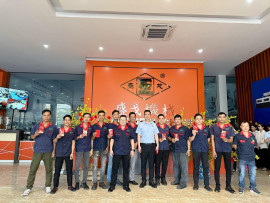
Through these efforts, the Vietnamese team has steadily developed its capabilities. Employees who have been with the company since its early days now lead departments, mentor younger colleagues, and conduct customer discussions and meetings in Japanese. The young engineers who once accompanied Okamoto to Switzerland to learn new techniques are now area leaders, carefully passing on their expertise to their teams. Reflecting the company’s strong employee retention, most new hires are reportedly added to support business expansion rather than to replace departing staff.
The results are visible inside the factory as well.
When employees need fixtures or equipment, they devise and build them themselves. Beginning with workbenches and shelves, they have progressed to making production equipment such as a sludge compactor and a barrel polishing machine. A culture of turning shop-floor ideas into practical solutions has gradually taken root. Behind this initiative lies a conviction Okamoto has held throughout:
“I want this to be a company where our employees, too, can say, ‘I am glad I work at Okamoto.’”
His goal is not simply to pass on technical skills. He wants to establish a cycle in Vietnam in which people develop and, in turn, help others grow. He sees that cycle as the foundation of the company’s future.
The Next Stage of Growth, with All of Vietnam in View
Alongside advancing its small-part machining expertise and expanding its processing capabilities, the company is preparing for the future. One priority is the use of production data and automation. It has introduced centralized management of machine operating status, production results, and inventory information, creating an environment where essential information can be shared in real time. Robots have been introduced into forming operations, while in-house-developed automated measuring machines are also being used to improve quality and production efficiency.
This emphasis on automation reflects the company’s ambition to create more value at its factory as labor costs continue to rise in Vietnam.
Okamoto believes its greatest competitive advantage in the years ahead will come from moving beyond the conventional reliance on large numbers of workers and improving each employee’s productivity through automation centered on AI and robotics. He wants to return the resulting added value to employees through higher incomes and better benefits. For him, that is what gives meaning to running a business in Vietnam.
The company is also laying the groundwork for its next phase of growth. Previously, after being selected for a JETRO program supporting overseas business expansion, it relocated its factory and increased production space to approximately 1.5 times its former size. Continued business growth is now making the current factory increasingly cramped, and the company is considering further expansion of its production facilities.
Market development is another priority. This year, the company joined the Vietnam Association for Supporting Industries (VASI), seeking to expand its network among Vietnamese companies alongside the Japanese companies that have traditionally formed the core of its customer base. As Vietnam’s supporting industries become more sophisticated, collaboration with local companies offers new possibilities.
A broader range of machining applications is also supporting the next stage of growth. Following cameras and outdoor equipment, the company has recently entered the market for everyday consumer goods.
“Unlike cameras or outdoor equipment, everyday goods are closely connected to daily life and used by almost everyone.”
Encouraged by its progress, the company sees this as one of the areas it intends to develop further.
FBC ASEAN: Bringing People and Businesses Together
The company exhibits every year at the FBC ASEAN manufacturing business matching event to showcase these initiatives. For Okamoto Engineering Vietnam, FBC ASEAN is a valuable opportunity both to connect with new customers and to broaden its manufacturing network.
Last year’s event generated an inquiry for precision mechanical components for a new category of B2C products—everyday consumer goods—that the company had not previously handled, helping it steadily broaden its business.
Okamoto also values the event as an opportunity to meet potential manufacturing partners. The company continues to seek partners, particularly in fields such as surface treatment, making these encounters especially valuable.
Asked why he rates FBC ASEAN so highly among the many exhibitions available, he explains:
“The greatest appeal of this event is that, among the exhibitions I know in Vietnam, it has by far the largest number of Japanese company exhibitors and Japanese visitors. As Japanese companies working hard to succeed overseas, we can begin with a sense of solidarity—‘Let’s help each other grow.’ I find that this makes business discussions much easier to move forward and bring to a successful conclusion. We can reconnect with people we have not seen in a long time, almost like a reunion, and those encounters lead to new introductions. To me, this event really is the largest hub for Japanese manufacturing in Vietnam.”
This year, the company will also take part in the spinning top battle organized by VASI at the venue. Having won the inaugural tournament, it is selecting its representatives through an internal competition this time. The employee who wins the internal competition will receive a training trip to Japan, further building enthusiasm within the company.
Okamoto closes with a message to visitors:
“Please stop by our booth. We would be delighted to discuss your machining needs—and would also welcome any tips you can share on the secrets of winning a spinning top battle. All of us at the company sincerely look forward to meeting many of you at the event.”