

Lead: Since investing in Vietnam in 2006, Hyundai Aluminum Vina has built capabilities spanning billet casting, die design and manufacturing, extrusion and surface treatment, CNC machining, and finished-product assembly. With operations in Hung Yen, Thai Nguyen, and Binh Duong and a workforce of approximately 3,000, the company is entering a new phase of expansion in Vietnam and across Asia by participating directly in FBC 2026 as an exhibitor for the first time.
Hyundai Aluminum Vina is part of Aluko Group, a Korean aluminum specialist with a history dating back to 1956. Building on its casting and extrusion expertise, the group has gradually expanded into technically demanding fields such as electronic components, automotive applications, energy, industrial materials, and architectural aluminum.
Hyundai Aluminum Vina was established in Vietnam in October 2006. The group’s early decision to invest in the country reflected its leadership’s confidence in the capabilities, agility, and work ethic of Vietnamese employees. Nearly two decades later, Vietnam is no longer simply a manufacturing location; it is playing an increasingly important role in the company’s operating and market-development plans.
Nearly two decades of building a manufacturing base in Vietnam
Hyundai Aluminum Vina’s main facility is located on approximately 10 hectares in Pho Noi A Industrial Park, Hung Yen. In 2015, the group made a further investment in ALK Vina, a roughly 30-hectare operation in Thai Nguyen near the Samsung complex, while also operating an additional plant in Binh Duong.
This network enables the company to serve customers in both northern and southern Vietnam as well as export programs. The Hung Yen facility focuses on products such as aluminum ladders, LCD frames, and solar-panel frames, while Thai Nguyen handles architectural aluminum, automotive components, mobile-device components, and die manufacturing.
Approximately 3,000 people work across the group’s operations in Vietnam. Most management positions below department-head level are held by Vietnamese employees. This degree of localization helps the company stay closely aligned with operating conditions, customer needs, and the particular characteristics of the domestic market.
This foundation also allows Hyundai Aluminum Vina to organize its business development along two tracks. Large projects with long development cycles and dedicated investment requirements are generally managed at group level. Domestic customers, foreign-invested enterprises, and orders requiring flexible handling are managed directly by the team in Vietnam.
One-Stop System: Control across the entire production chain
Hyundai Aluminum Vina’s core differentiator is its integrated manufacturing model, which the company calls the “One-Stop System.”
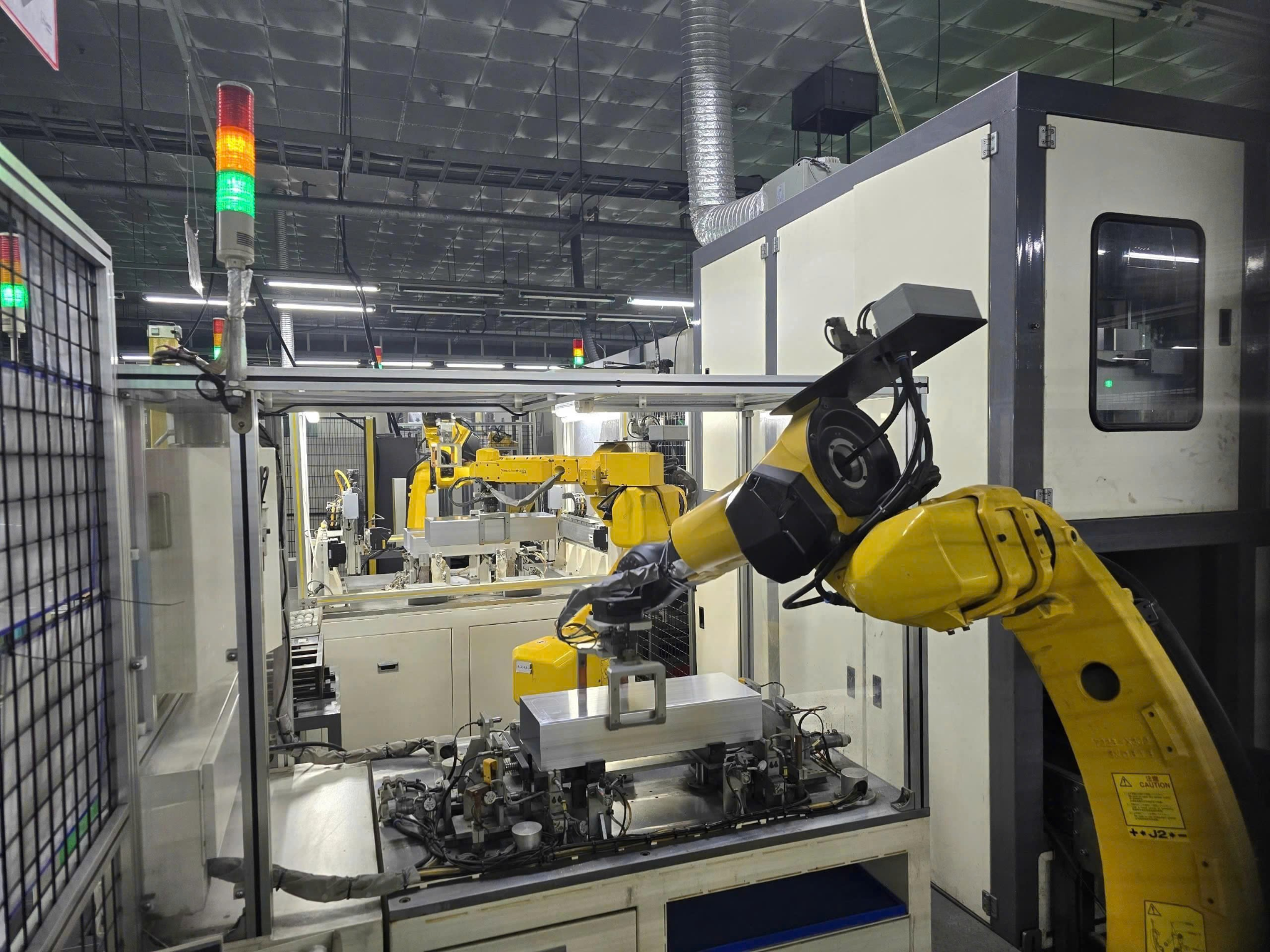
Rather than purchasing billet and performing only selected processes, the system begins with incoming aluminum material and continues through billet casting, die design and manufacturing, extrusion, anodizing or powder coating, CNC machining, assembly, and product finishing.
This model first enables quality control from the very beginning of the production chain. If the billet is inconsistent, even well-executed downstream processes may not deliver the required final quality. By controlling casting in-house, Hyundai Aluminum Vina can better manage material composition, hardness, stability, and machinability.
In-house die manufacturing is another important link in the chain. Engineers at the plant can design, inspect, adjust, and repair dies directly. If shape defects or dimensional deviations arise after extrusion, teams can work together on site to identify and address the cause instead of waiting for an external supplier.
For electronics, electric-vehicle, and co-development projects in particular, an integrated production chain can also strengthen confidentiality. Limiting the number of parties with access to drawings, material structures, and project information is especially important when the parties must comply with a non-disclosure agreement (NDA).
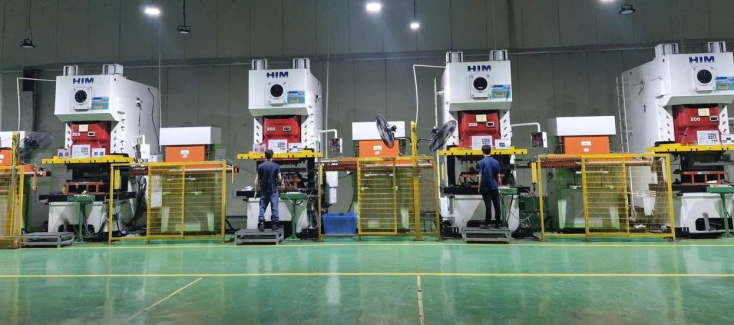
According to figures published by the company, total annual capacity across the system is 155,000 tonnes of billet casting and 144,000 tonnes of extrusion. At the time of publication, the facilities in Vietnam accounted for 102,000 tonnes of casting capacity and 90,000 tonnes of extrusion capacity. These figures indicate Vietnam’s significant share of the group’s manufacturing capability.
The value to customers, however, lies in more than scale. More significant is the ability to take a project from incoming material to finished product within a single system, reducing dependence on intermediate suppliers and shortening response times when issues arise.
From electronic components to EV battery enclosures
In electronics, the group began supplying aluminum frames for Samsung Galaxy devices in 2015, including the S, Note, and A series. Its processing scope extends beyond material supply to include operations such as stamping, CNC machining, and surface treatment.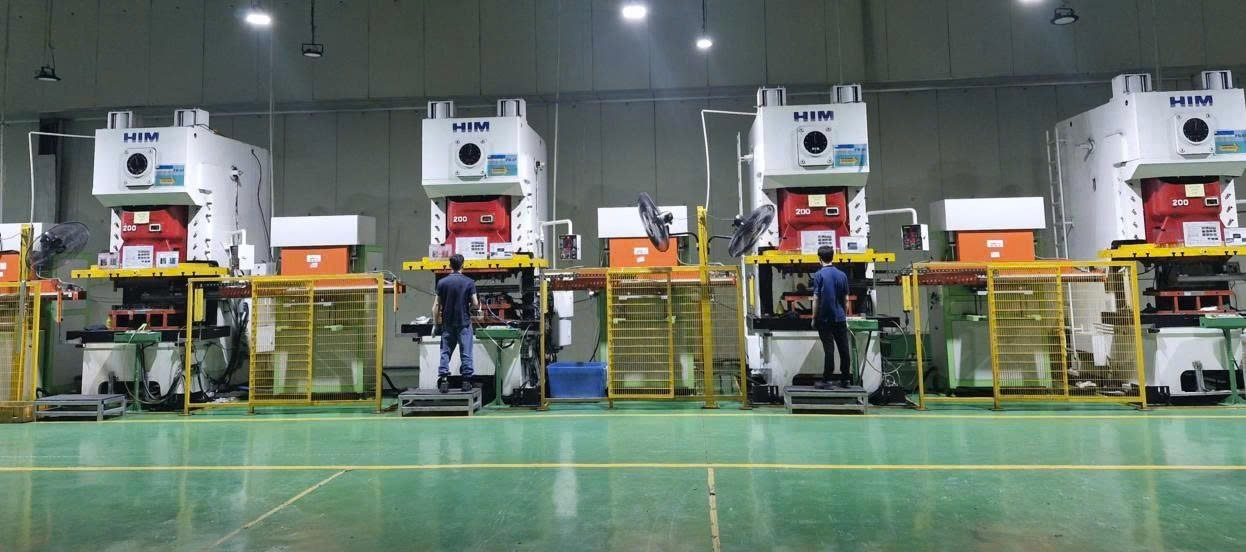
These products must combine thinness, rigidity, precision, and high surface quality. Even a minor deviation in casting or extrusion can affect every downstream process. Continuous control from material to finished product is therefore essential to maintaining consistency.
The group also manufactures television frames for Samsung and LG, including products for OLED and curved televisions. These products require strong visual quality, complex profiles, and a uniform surface finish after multiple processing stages.
Some electronic-component lines also incorporate high-purity aluminum filtration technology and proprietary alloy solutions.
In the energy sector, Hyundai Aluminum Vina manufactures solar-panel frames and exports them to the United States in large volumes. This is also one of the product groups expected to be presented at FBC 2026.
In electric mobility, the company develops aluminum housings, cell covers, and battery enclosures for both electric motorcycles and electric cars. In these applications, aluminum is not merely an outer covering; it must also meet requirements for weight, durability, precision, and protection of the battery system.
By linking alloy design, die manufacturing, extrusion, machining, and assembly, Hyundai Aluminum can participate more deeply in product development. For many major projects, the company does more than manufacture to an existing drawing: it becomes involved at an early stage and works with the customer to adapt the design for mass production.
In addition to electronics, energy, and electric vehicles, the company manufactures aluminum ladders on an OEM basis for export to the United States. Building on this foundation, it is developing products under the Aluko brand and gradually opening an additional B2C business channel.
Architectural aluminum and the ability to handle demanding projects
Architectural aluminum is one of Hyundai Aluminum’s longest-established business areas.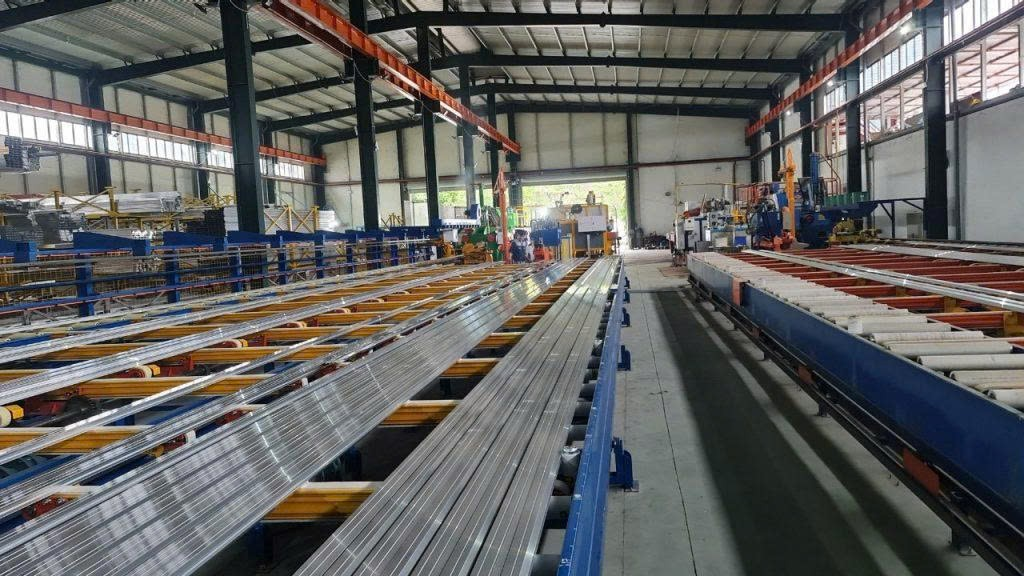
The portfolio includes curtain-wall systems, aluminum windows and doors, aluminum formwork, louver systems, and components for civil construction. The company has participated in major projects in Vietnam and overseas, including Landmark 81, Keangnam Hanoi Landmark Tower, Shilla Monogram Hanoi Westlake, Taiwan Taoyuan Airport, and Macau Tower. Among these, Landmark 81 was highlighted by Hannah, a company representative, during the company’s presentation. This landmark Vietnamese project imposed strict design standards and quality requirements, and Hyundai Aluminum Vina earned the confidence of the UK-based supervision consultant through its design capability, construction execution, and material quality.
The project’s value lies not only in the scale of the building. It also demonstrates the benefit of an integrated production chain when a customer needs to trace root causes, make technical adjustments, and resolve issues quickly during implementation.
In aluminum formwork, the company supplies the AL-Formwork system, which is lightweight, rigid, and easy to install and dismantle. The system helps shorten construction time, reduce labor costs and waste, and improve the consistency of concrete surfaces.
These capabilities also provide a basis for Hyundai Aluminum Vina to expand its approach to the Japanese market. The company is targeting three areas: aluminum for electronics, aluminum for servers, and architectural aluminum.
Flexible support for small orders
Large-scale operations create an advantage in mass production, but they can also become a barrier to small orders. Hyundai Aluminum Vina addresses this challenge through a dedicated sales team in Vietnam and a production policy organized by die.
The costs of die installation and removal and machine setup directly affect unit pricing. For small or irregular orders, the company can work with customers to consolidate volumes for each production run, then hold the output in inventory or divide it into scheduled deliveries.
For Japanese customers, instead of placing very small orders repeatedly, the company may recommend consolidating demand by die, producing an appropriate volume in a single run, and taking delivery in stages. This approach reduces the impact of machine-setup and die-related costs on product pricing while preserving the ability to serve customers with uneven demand.
Alongside major corporations, Hyundai Aluminum Vina also serves Vietnam’s domestic market. Its local team manages more than 60 dealers and domestic customers, including small orders for household and industrial products.
The ability to serve these two customer groups—large projects managed by the group and flexible orders handled by the Vietnam team—allows the company to expand its market without changing its established large-scale manufacturing platform.
R&D supports product co-development
Hyundai Aluminum Vina maintains an R&D team in Vietnam and collaborates with its Korean team on major projects or assignments requiring in-depth research.
The group’s R&D system covers a broad range of functions, from technology, process, and product development to design, analysis, and prototype production. One of the materials developed is an aluminum alloy with good strength and machinability, suitable for structural, road, and bridge applications.
The R&D team in Vietnam can operate independently on many projects. Its members mainly come from technical universities in Korea and a Vietnamese university of science and technology, while the team coordinates with Korea when greater research resources are required. The company also works with VKIST. These capabilities allow Hyundai Aluminum Vina to move beyond the role of a contract processor. For new products, it can participate from the initial research stage and work with customers to optimize designs, select materials, and establish processes before investment in mass production.
This is also the direction the company intends to advance in Vietnam, particularly for higher-value products such as solar-panel frames, EV battery enclosures, aluminum for servers, and architectural aluminum components.
“Made in Vietnam” in the company’s market strategy
Alongside manufacturing capability, product origin is an important element of Hyundai Aluminum Vina’s market strategy.
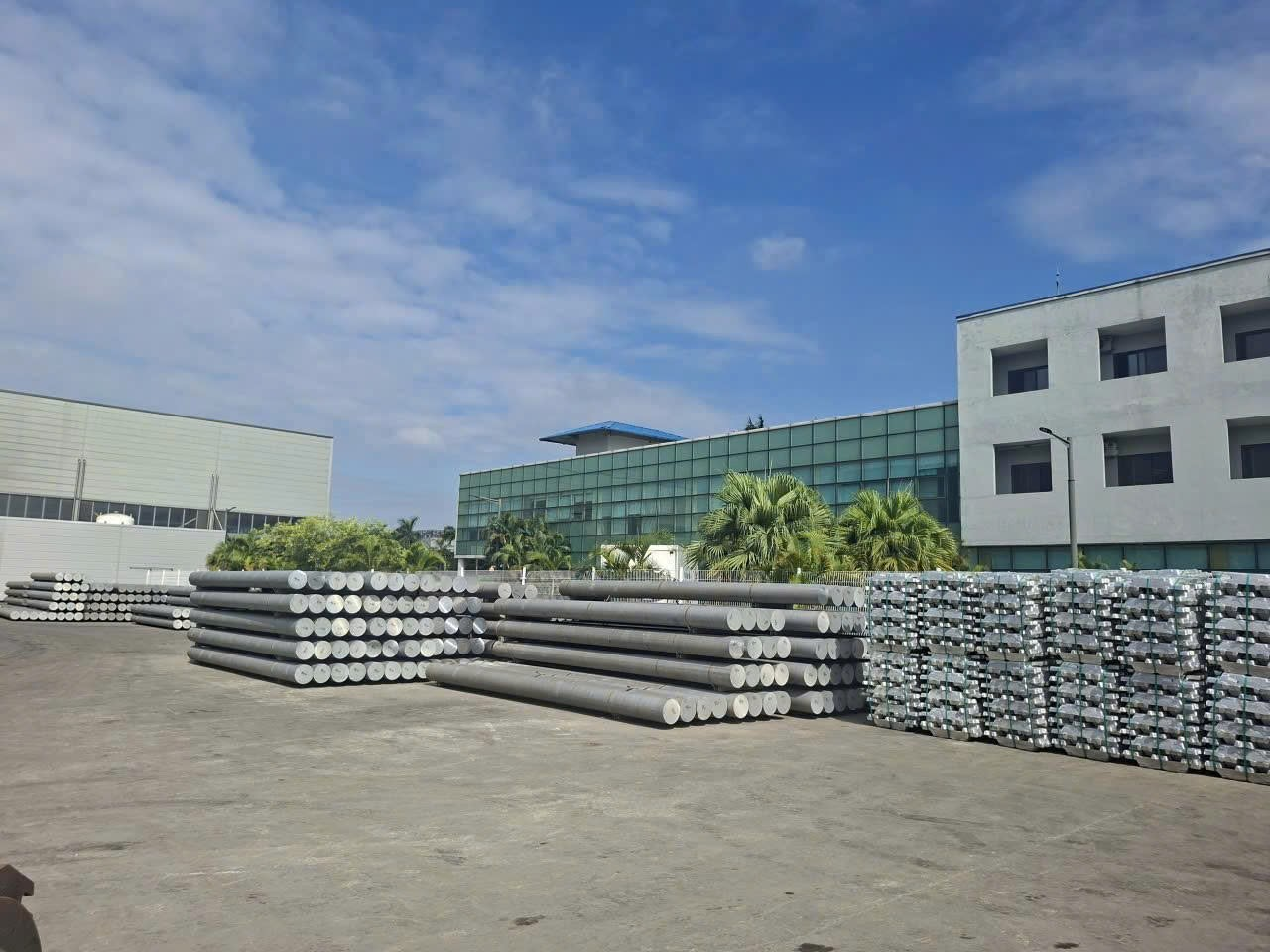
According to the company, the primary aluminum inputs used in production in Vietnam are not imported from China. They are sourced mainly from Vietnam, the United States, the Middle East, and Malaysia. Controlling the production chain in Vietnam—from billet casting through machining and finishing—gives the company greater control in meeting origin requirements. This is particularly important for exports such as solar-panel frames, electronic components, and parts for electric vehicles as major markets tighten traceability requirements for origin and supply chains.
Globally, Aluko Group organizes its manufacturing capacity by market region. Vietnam is one of its important production platforms for orders in Asia, while markets such as the United States and Europe can be served through the corresponding facilities in the group’s network.
For Hyundai Aluminum Vina, “Made in Vietnam” is more than information printed on a product. It is also an advantage in approaching customers that seek supply sources capable of controlling materials, tracing processes, and limiting risks associated with international trade.
FBC ASEAN: Expanding the company’s presence in Vietnam and Asia
FBC 2026 marks the first time Hyundai Aluminum Vina will participate directly in an exhibition in Vietnam as an exhibitor, rather than appearing through a dealer as it has in the past.
The first objective is to raise brand awareness in Vietnam and across Asia. Although Hyundai Aluminum Vina already participates in several major supply chains, it has not previously invested heavily in presenting its capabilities directly to the domestic market.
The second objective is to reach new customers, particularly Vietnamese, Japanese, and Singaporean companies, as well as businesses seeking aluminum supply of Vietnamese origin.
The third objective is to present new areas of development. Alongside solar-panel frames, battery cases, architectural aluminum, and aluminum ladders, the company is particularly interested in aluminum applications for servers, a field linked to the growth of technology infrastructure and data centers.
FBC will also give Hyundai Aluminum Vina an opportunity to meet customers with medium-sized and small orders directly, rather than focusing only on large-scale manufacturing programs. The company has organized a dedicated sales team in Vietnam to serve this customer group.
With an integrated manufacturing platform, a workforce of approximately 3,000, and the ability to support both major projects and flexible orders, FBC 2026 will provide Hyundai Aluminum Vina with an opportunity to bring its One-Stop System and “Made in Vietnam” advantage closer to the market.