

Entering the Vietnamese market, Chinese cars face many challenges.
Flood into Vietnam
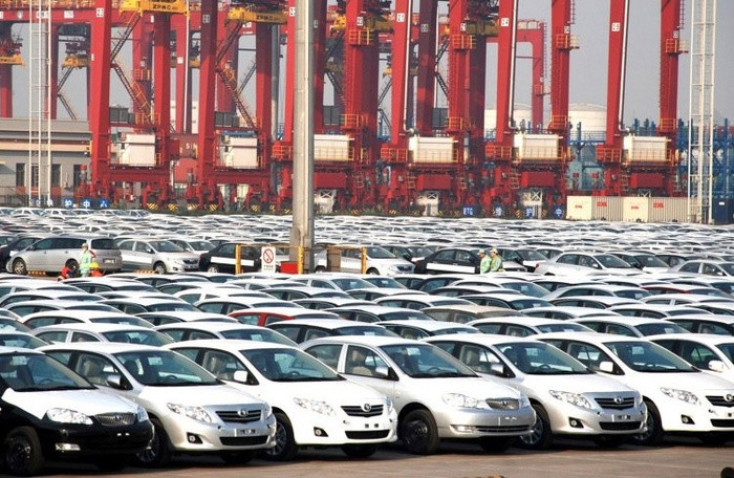
China has 123 automotive manufacturers with a capacity of about 40 million vehicles per year. However, domestic consumption only reaches about 22 million of these. With supply far exceeding domestic demand, Chinese automotive manufacturers are pushing to expand their market globally, targeting major markets such as North America, Europe, Southeast Asia, etc. The trend of Chinese cars flooding the world can be felt right here in Vietnam.
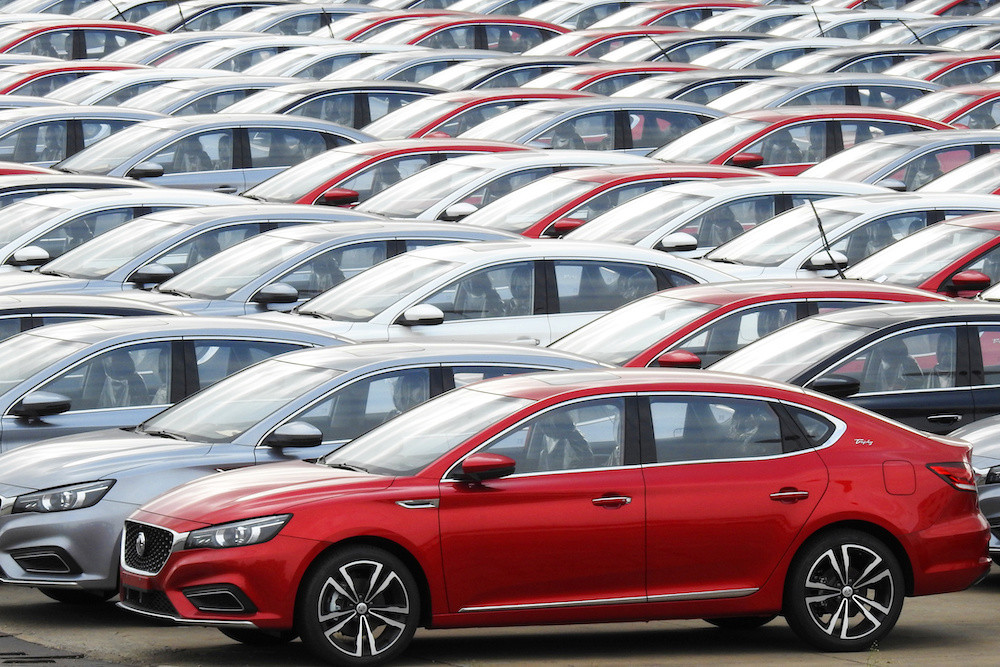
With excess capacity, Chinese automotive manufacturers boost exports. (Illustration)
In 2023, many Chinese automotive manufacturers entered Vietnam, such as GWM (Haval), Geely (Lynk & Co), SGMW (Wuling Mini EV), Haima, etc. Soon there will be a series of Chinese automotive manufacturers entering the Vietnamese market, most notably BYD, Chery (Omoda, Jaecoo), GAC (Aion), etc.
Vietnam is a potential automotive market. With a population of 100 million people, the economy is growing, and the era of automobileization is coming. According to forecasts, the scale of Vietnam's automotive market will reach 1 million vehicles by 2023 and 1.5 million vehicles after 2035. Meanwhile, the Vietnamese government has set a roadmap to gradually restrict and stop producing, assembling, and importing cars and motorcycles using fossil fuels by 2040. By 2050, all vehicles will switch to using electricity and green energy. Thus, electric vehicles have great potential.
Meanwhile, China is leading the world in electric vehicles. Among the 123 automotive manufacturers in China, every enterprise has at least one electric vehicle model. With excess capacity, expanding the market to Vietnam is a suitable direction.
Big challenge
However, when entering the Vietnamese market, Chinese cars face many challenges. The mentality of most Vietnamese customers is still apprehensive about the quality of Chinese cars.
For cars using internal combustion engines, consumers still trust Japanese, American, and Korean brands. Internal combustion engines developed by Chinese automotive manufacturers are underrated. The soul of a car is the engine. If the engine is not durable, unreliable, quickly degrades, and wastes fuel, the car will have no value.
Electric cars are the strength of the Chinese automotive manufacturers, but the problem is also very difficult. For example, lots of electric cars from BYD (a Chinese automotive manufacturer) exported to Europe encountered quality problems and could not get through customs. In addition to the quality not being reliable enough, the infrastructure system of charging stations in Vietnam has not yet developed, which is also a limiting factor. Vietnamese consumers are still skeptical and not really ready.
Recently, some Chinese car manufacturers have entered Vietnam but have struggled to sell. There was a new brand launching to Vietnamese customers in the second half of 2023; so far, sales have stopped at less than 20 cars, of which the majority of buyers were also sellers.
According to experts, the success or failure of Chinese cars in foreign markets in general and Vietnam in particular depends on two questions: Can car manufacturers convince customers to overcome their reservations and buy Chinese-branded cars? And do Chinese cars offer superior value to consumers compared to their competitors?