


The "Vietnam Mold Grand Prix" organized by the Japan-Vietnam Mold Club, is planned as an initiative aimed at upgrading this industry. Its role is expanding beyond simply acquiring skills to become a forum for human resource development supporting the industrial structure that generates added value.
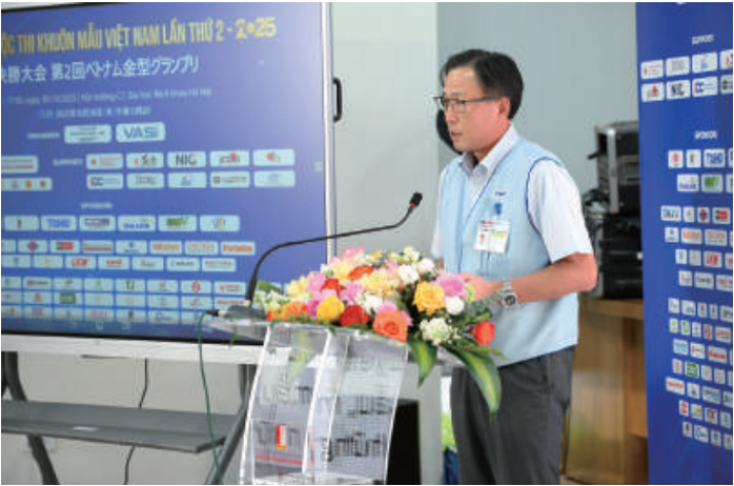
Mold Education at the Heart of Industrialization - Students Take on Practice - Oriented Design Challenges
Vietnam's manufacturing sector is entering a phase of consolidating its industrial foundation while strengthening its presence as an export hub. As the capacity to produce finished products and components expands, the development of human resources responsible for fundamental technologies such as mold design and fabrication is increasingly recognized as a crucial topic supporting growth. The "Vietnam Mold Grand Prix" organized by the Japan-Vietnam Mold Club, is planned as an initiative aimed at upgrading this industry. Its role is expanding beyond simply acquiring skills to become a forum for human resource development supporting the industrial structure that generates added value.
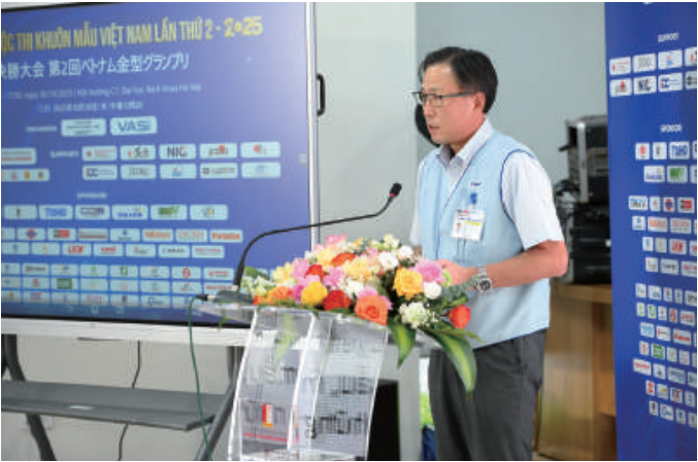
Mr. Hideya Maniwa, Chairman of Japan-Vietnam Mold Club
Competitive Design Competition in Industrial Practice
The "Mold Grand Prix" organized by the Japan-Vietnam Mold Club, is an educational event aimed at providing students with practical experience in the field of mold making. First held in 2024, the competition has played a significant role in sparking interest in mold making among students and educational institutions by providing them with opportunities to participate in mold design.
This second competition took a step further, with the main highlight being the expansion of the competition scope to include students actually fabricating molds and completing products. The competition was divided into "Plastic Mold Category" and "Press Mold Category", requiring students to think consistently from product drawings to mold concepts, design, machining, and assembly, as well as stability during mass production. The evaluation was based not only on the completeness of the design but also on the students' ability to predict subsequent processes and actual production environment.
The 2nd Vietnam Mold & Die Grand Prix – Event Overview
Date: Thursday, October 30, 2025
Time: 9:00 AM – 5:00 PM
Venue: Hanoi University of Science and Technology, C7 Hall
Organizers: Japan-Vietnam Mold & Die Club, Vietnam Association for Supporting Industries (VASI)
Participating Universities: University of Science and Technology – The University of Da Nang; Hanoi University of Science and Technology; Hanoi University of Mining and Geology; Hanoi University of Industry; Ly Thai To College of High Technology; University of Technology and Education; Industrial University of Ho Chi Minh City
Manufacturing Challenges:
Plastic Mold Category: Golf Marker, Golf Tee
Stamping Die Category: Golf Fork
Case Provider: Japan Die & Mold Industry Association
Importantly, whether candidates can explain "why that particular structure was chosen". The accuracy of the drawings and fundamental knowledge were taken for granted, but the key is how they perceive the machinability, maintainability, and risks in mass production, and at what stage those decisions are made. The ability to articulate that thought process would determine the evaluation.
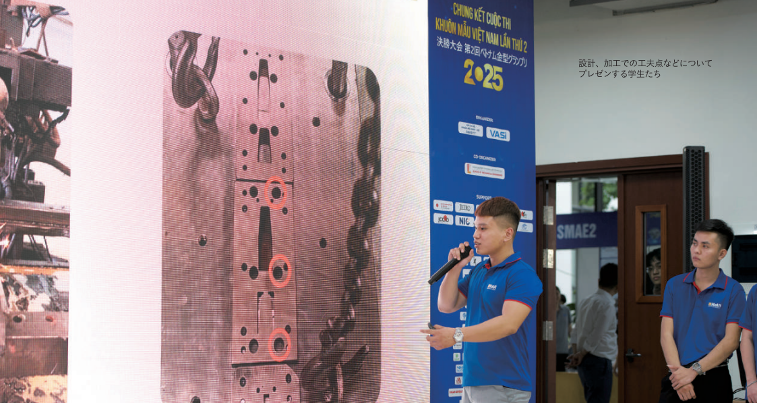
Students presented their ideas and innovations in design and processing
Despite its importance, the mold making industry is not widely known among younger generations. That is why this competition specifically focused on providing opportunities for the next generation, who previously had little exposure to the mold making industry, to directly experience the production process. The Mold Grand Prix aimed to expand the talent pool by providing opportunities to experience firsthand the role and appeal of molds, while contributing to the sustainable development of the mold industry in both Japan and Vietnam.
Plastic Mold Category: Design and Decision-Making from Prototyping
The challenging products for the Plastic Molding competition were “Golf Marker" and "Golf Tee". Although the shapes were relatively simple, the challenge required a balance between dimensional accuracy and form quality, meaning the cumulative design thinking and decision-making process directly impacted the final product. Each group of university students met these conditions with a different approach.
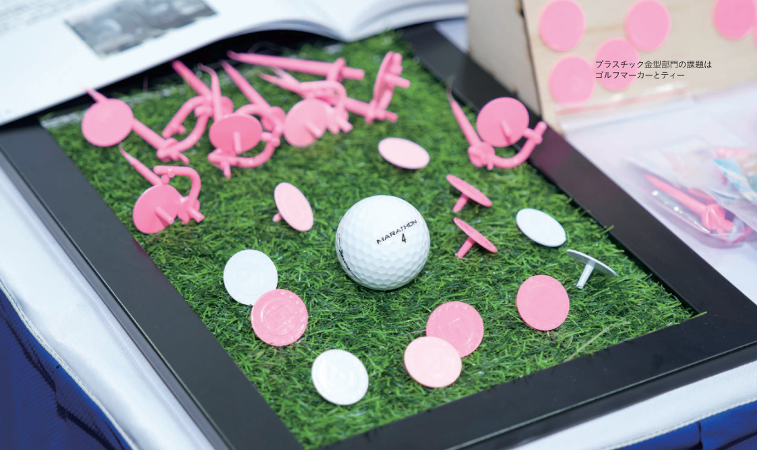
The challenge for the Plastic Mold Category: Golf Marker and Golf Tee
Two teams from Da Nang University of Technology demonstrated technical ingenuity. The DUT-HI group combined a two-plate structure with a two-stage indentation removal mechanism, effectively handling the specific indentations of golf tee parts while maintaining core accuracy and durability. Furthermore, to mold different materials, which are PP and POM, in the same mold, they implemented an OFF-ON resin flow system, allowing for the molding of multiple parts in the same cycle by switching the resin flow. The DUT-2DQL group from the same university designed a two-plate mold using POM resin. By utilizing 3D printing technology to fabricate the mold cavity and applying a suitable cooling system, they aimed to improve heat transfer efficiency and shorten cooling time.
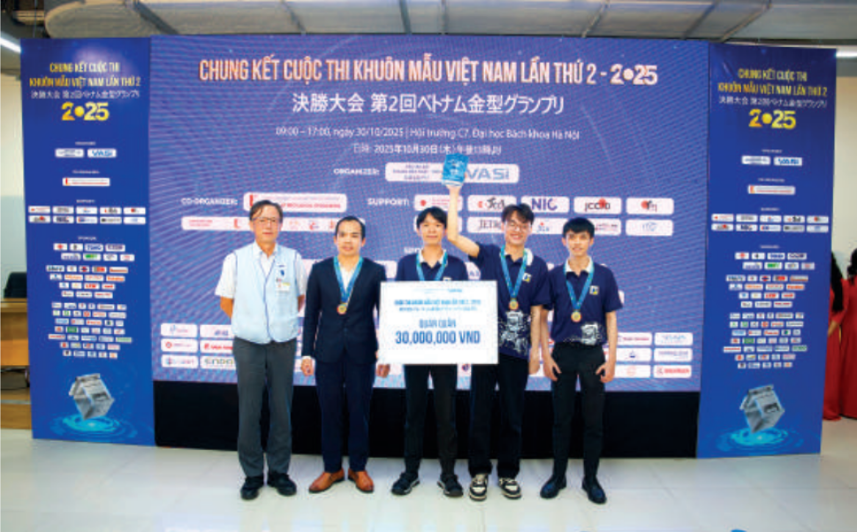
The DUT-HI team from Da Nang University of Technology won the First Prize
The SME JOINT LAB at Hanoi University of Science and Technology designed a mold that achieved both excellent visual quality and adherence to design tolerances, based on the premise of injection molding two cavities at a time. Cost factors were also taken into account by keeping the structure simple, with the goal of installation on a Sumitomo 50-ton injection molding machine. The SMAE 2 group at Hanoi University of Industry used a FUTABA two-plate mold base and achieved short design time, high assembly accuracy, and low cost with a replaceable insert structure. Regarding machining, an EDM milling machine was used to achieve an accuracy of ±0.02 mm and ensure precise fit.
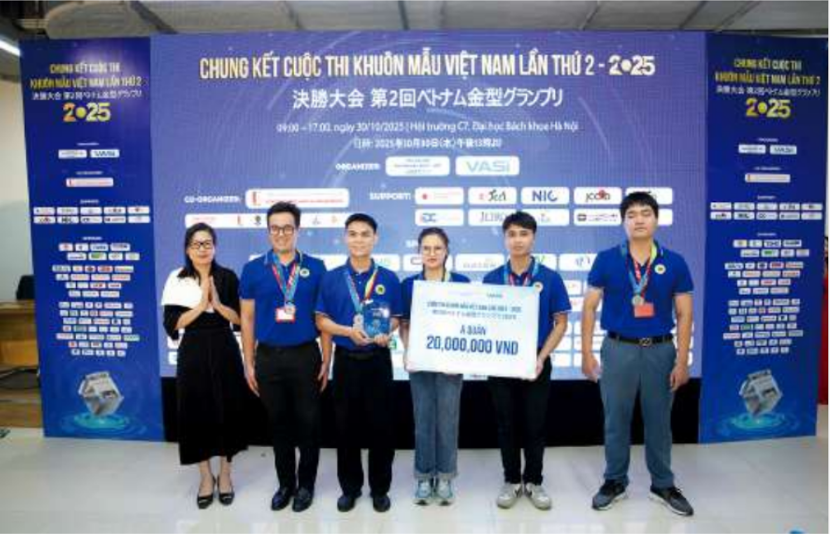
Hanoi University of Science and Technology's SME Joint Lab won the Second Prize.
And The LIC-MoldRise group at Ly Thai To Innovation College designed a high-precision injection mold based on product drawings. They optimized the mold structure to ensure mass production, durability, accuracy, and visual quality during POM injection molding. The DHCN-HCM group of Industrial University of Ho Chi Minh City created a layout that took into account the mold structure, injection gate position, and number of mold cavities, and selected a standard mold structure. Because the product surface design could be freely set, they used the university's logo. The CTM73-UTT group at the University of Transport and Technology designed an injection mold that ensured accuracy and durability in a compact and simple structure, while also considering ease of operation. By rationally arranging the cooling system, ejection mechanism, and plastic flow path, they improved mold separation and achieved both visual quality and mold stability.
The common thread in the group's approach was a constructive evaluation through prototyping and comparing designs with actual molding results. They meticulously examined every element, such as injection molding burrs, plastic shrinkage, and mold strength, and approached optimal solutions by continuously integrating theory and practice. This accumulated experience broadened the students' perspective from simply "making" to "thinking and judging" in their manufacturing process.
Press Mold Category: Design and Mass Production Process
Three teams from the Hanoi University of Science and Technology and the Hanoi University of Industry participated in the Press Mold Category. The assigned product was a "Golf Fork". Although a small detail, the success of the project depended directly on material performance and the quality of process design in mass production. Each team focused on how to improve material efficiency and process stability, assuming the use of a continuous stamping die.
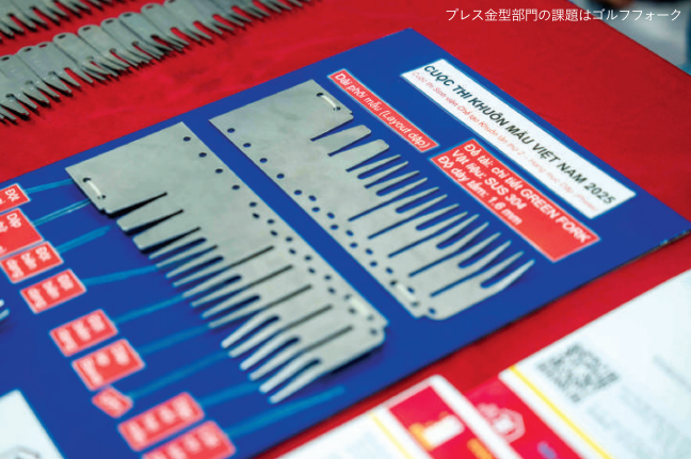
The challenge for the Press Mold Category: Golf Fork
The BKAD group at Hanoi University of Science and Technology completed the entire process from design to production and testing under limited equipment conditions, transforming their ideas into actual molded products. In mold design, they focused on simplifying the structure and reducing material costs, while also aiming for sustainable production. During the manufacturing and assembly process, they encountered challenges such as dimensional accuracy, parallelism, and cracks and ridges in the casting process, and they solved these problems through trial and error. This clearly demonstrates that not only design ability but also on-site judgment and teamwork are crucial to quality.
Meanwhile, two teams from the Faculty of Mechanical and Electronics Engineering, Hanoi University of Industry also participated. The IMAE-MT011 team envisioned a continuous die for mass production of small mechanical parts, based on the premise of automatic feeding and process linkage. This design aims to reduce costs and automate processes, focusing on process stability and improving accuracy.
The DCN-SMAE1 group at the university designed and fabricated a continuous die for mass production of small parts. Based on the premise of automatic feeding and process linkage, the design aimed to balance productivity and accuracy, optimize the process sequence, and set the stamping step during the design phase. Wire electrical discharge machining (WEDM) was used to process complex shapes and ensure accuracy. The balance between mold precision and durability is also verified through assembly and adjustment.
The common point among the three groups is that they not only focus on creating the shape, but also build the design based on "how it works in mass production." Based on the premise that factors such as process design, precision control, and positioning directly affect productivity and quality, they continuously create prototypes and make modifications. Through the interaction between design and the actual operation of machines, the constraints from the production side gradually became clear, and a design mindset focused on mass production was formed.
Educational events reveal hints to strengthen the industrial foundation
The competition highlighted the importance of connecting design and practical application. Structures that performed well in design simulations were affected by factors such as burrs, plastic shrinkage, and metal deformation during actual machining and assembly. Through their work, the students concretely understood that mold making is not a theoretical endeavor, but a technology built upon a series of processes.
In the team design process, information sharing, and decision-making have proven far more important than the technical accuracy of the solution. When adjusting parts with tight tolerances, clearly identifying the reasons for the modifications and their impact, as well as sharing this information among team members, is key to improving design accuracy. The process of analyzing defects and incorporating those findings into subsequent designs and manufacturing processes mirrors the daily improvement practices within the production environment.
The 2nd Vietnam Mold & Die Grand Prix - Results Award Details:
First Prize: University of Science and Technology – The University of Da Nang (DUT-HI)
Second Prize: Hanoi University of Science and Technology (SME Joint lab)
Third Prize: Industrial University of Ho Chi Minh City (DHCN-HCM)
Presentation Award: Hanoi University of Science and Technology (BKAD Team)
Technical Award: Hanoi University of Industry (SMAE2)
Consolation Prize:
Hanoi University of Industry (DCN-SMAE1)
Ly Thai To College of High Technology (LIC Moldrise)
Hanoi University of Mining and Geology (IMAE-MT01)
University of Technology and Education (CTM73-UTT)
University of Science and Technology – The University of Da Nang (DUT-2DQL)
While educational achievements have been affirmed, the competition also highlights another challenge: industry involvement. There is considerable collaboration between Japanese and Vietnamese companies producing molds, as well as between Vietnamese companies using molds. However, there was very little collaboration between Japanese and Vietnamese companies planning mass production of products based on molds, or between Japanese companies using molds. The competition was widely promoted to both Japanese and Vietnamese companies thanks to the cooperation of the Japan Chamber of Commerce and Industry in Vietnam (JCCI) and the Vietnam Association of Supporting Industries (VASI), which were listed as sponsors. Nevertheless, the participants still showed a lack of diversity.
As to this, Vice President Yoshinaka of the Japan-Vietnam Mold Club stated the following:
"Good molds and products cannot be achieved solely by mold manufacturers. Only when mold-using companies and product design companies cooperate, Vietnam can produce products that are competitive in the global market. Up to now, in Vietnam, molds are often imported from abroad, and mold-using companies as well as companies that mass-produce products using molds have not accumulated enough knowledge about molds. I believe this structure is one of the reasons hindering the development of domestic mold technology."
Increasing the rate of domestic mold procurement is a crucial topic for Vietnam's manufacturing industry to shift from a focus on assembly to higher value-added sectors. Achieving this requires not only capital investment but also a more diverse workforce capable of comprehensively understanding the design, machining, and mold-making processes, as well as making decisions directly at the factory. This year's Grand Prix competition serves as a platform for students and young engineers to experience the full spectrum of the mold making industry, while also providing an opportunity for the industry to reconsider its role. To what extent can those responsible for planning the mass production of mold-based products participate? This will be one of the challenges of the third competition. After the second competition, the direction of the competition has become clearer. The Mold Making Grand Prix is not simply a place to compete on the quality of finished products, but also values the process itself, fostering thinking and judgment based on production practices. Its role as a concrete demonstration of the connection between education and industry is becoming increasingly evident.


