

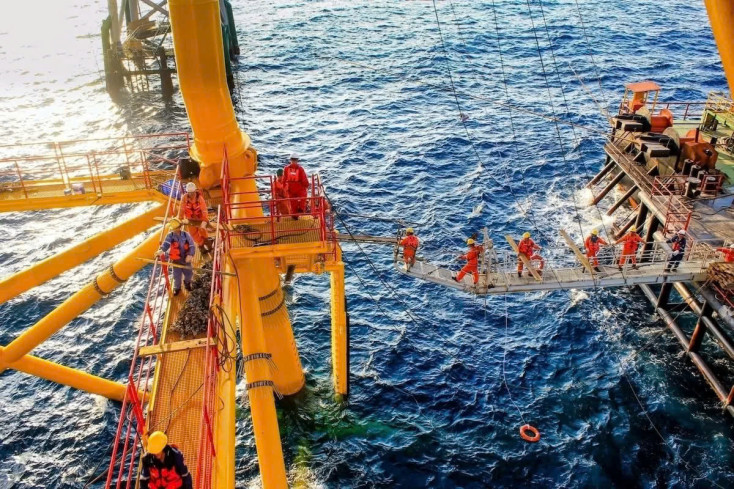
Energy and oil cooperation is a leading pillar in the Comprehensive Strategic Partnership between Vietnam and Russia.
In the first nine months of 2024, bilateral trade turnover between Vietnam and Russia reached 3.52 billion USD, marking a 40.4% increase over the same period in 2023. Exports accounted for 1.78 billion USD, up by 50.1%, while imports reached 1.74 billion USD, up by 31.6%. Among exported goods, several categories saw significant growth: seafood reached 164.5 million USD (up by 94.7% from the same period in 2023); rice reached 6.5 million USD (up by 130.9%); confectionery and cereal products reached 23.3 million USD (up by 123.7%); textiles and garments reached 616.3 million USD (up by 117.7%); machinery and equipment reached 176.6 million USD (up by 68.7%); and rubber reached 34.8 million USD (up by 49%).
The import items with high growth rates included: Various types of fertilizers, coal, paper, auto parts, and other transportation equipment.
According to the Department of European and American Markets, a key highlight in economic cooperation between the two countries is the strong development in the energy and oil sectors, marked by large projects. Besides the Vietsovpetro joint venture—a flagship in oil cooperation—other active joint ventures are now operating in both countries.
“Energy and oil cooperation is a top pillar in the Comprehensive Strategic Partnership between Vietnam and Russia,” emphasized the Department of European and American Markets. Furthermore, energy cooperation now extends beyond crude oil exploration and extraction to include building gas-fired power plants, supplying liquefied natural gas (LNG) to Vietnam, infrastructure development, renewable energy projects, motor fuel production, and modernizing Vietnam's energy infrastructure.
In industrial cooperation, the two sides have enhanced trade in raw materials for industrial production. Vietnamese companies regularly import coal from Russian partners to meet domestic demand. Regarding automotive cooperation, both countries signed a protocol between the Governments of the Socialist Republic of Vietnam and the Russian Federation to support motor vehicle production in Vietnam (the Protocol).
Additionally, both sides are exploring cooperation in potential sectors like mechanical engineering, metallurgy, chemicals, mineral processing, and the supply and manufacture of equipment for energy and transportation projects.
Assessing the economic and trade partnership between the two countries, Mr Duong Hoang Minh, Trade Counselor at the Vietnam Trade Office in the Russian Federation, noted that bilateral trade has shown positive growth and gained significant momentum. One of the main drivers has been the gradual resolution of transportation barriers; maritime routes (Vladivostok-Hai Phong-Ho Chi Minh City) and rail routes (Vietnam-China-Russia international rail) have seen gradual improvements.
Moreover, on June 4, 2023, Russia’s IAERO Airlines began direct flights between Irkutsk, Russia, and Hanoi, Vietnam, operating twice weekly with Russian aircraft. Direct flights between Moscow and Ho Chi Minh City resumed in late January 2024. Additionally, Russia and Vietnam have relaxed visa requirements for each other's citizens (since August 1, 2023, Vietnamese citizens can apply for e-visas to Russia; from August 15, Russians can stay in Vietnam visa-free for up to 45 days). These favorable conditions have created opportunities to promote bilateral trade, investment, and tourism cooperation.
However, Trade Counselor Duong Hoang Minh noted that economic and trade cooperation still faces major challenges amid global economic difficulties. Despite efforts by relevant agencies, import-export activities, and bilateral investment projects still face several barriers.
Facing these challenges, he recommended that businesses in both countries better leverage the Vietnam-Eurasian Economic Union Free Trade Agreement (VN-EAEU FTA); Russian enterprises could also increase investments in producing Russian-strength products in Vietnam to re-export to Russia, CIS countries, and other markets with which Vietnam has FTAs.
For domestic exporters, the Trade Office advised that to understand the market and seek customers in Russia, Vietnamese businesses should directly participate in product displays or visit major industry exhibitions in the Russian Federation. Many Vietnamese companies have achieved success after attending such exhibitions.