

While many organizations limit themselves to short-term “Kaizen events”, how has Toyota been able to sustain their superior competitiveness for decades ?
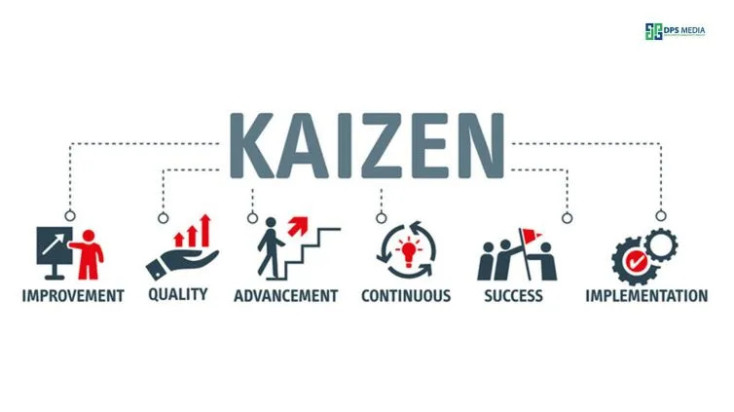
Toyota Kaizen Methods – Six Steps to Improvement
Authors: Isao Kato & Art Smalley
The Toyota Production System (TPS) and the concept of “Kaizen” are now widely recognized not only in manufacturing but also across service industries and information technology worldwide. However, while many organizations limit themselves to short-term “Kaizen events”, how has Toyota been able to sustain their superior competitiveness for decades ?
The answer is concisely captured in the book “Toyota Kaizen Methods: Six Steps to Improvement,” co-authored by Isao Kato and Art Smalley. This is not merely a theoretical book, but a practical handbook that systematizes Toyota’s internally developed capability for guiding Kaizen over many years.
One of the book’s most distinctive features is that it does not treat Kaizen as something driven by inspiration or intuition. Instead, it breaks Kaizen down into six scientific steps, making it accessible and actionable for anyone.
- Discover Improvement Potential
Begin by identifying the gap between standards and the current condition. The book redefines a “problem” as the deviation between the ideal state and the present reality.
- Analyze Current Methods
Using tools such as Time study (observation and measurement) and standardized work sheets, practitioners must thoroughly observe Gemba (the actual workplace). The authors emphasize that improvement without data is merely subjective speculation.
- Generate Original Ideas
Apply the “5 Whys” technique to reach root causes rather than addressing surface-level symptoms. A key point in this step is collaborative thinking, leveraging collective intelligence rather than individual assumptions.
- Develop an Implementation Plan
Clarify the requirements for execution, including resources, timeline, and role allocation.
- Implement the Plan
Conduct trials directly at the Gemba. In true Toyota style, the focus is not on achieving perfection from the outset, but on iterative experimentation (prototype & trial).
- Evaluate the New Method
Collect post-improvement data to verify whether objectives have been achieved. Only when effectiveness is proven can the new method be established as a “new standard.”
In 2026, as digital transformation (DX) continues to accelerate, data collection at the workplace is increasingly being replaced by sensors and AI. However, fundamental thinking processes, such as what data should be collected, how to define abnormalities, and how to optimize processes with a human-centered approach, remain beyond the reach of AI.
The “power of observation” and “analytical thinking” presented in this book serve as a robust operating system for effectively leveraging digital tools. Without improving (simplifying) processes before automation, organizations risk merely “automating waste.”
This book is particularly well suited for:
- Managers and leaders who aim to significantly enhance on-site productivity
- Organizations that are stuck in superficial, form-driven Kaizen that lacks depth
- Anyone who seeks to understand Toyota’s true strength through its methodology, not just theory
For these audiences, this is truly a “bible” of Kaizen. Rather than memorizing 100 theories, start by conducting a single study from this book at your actual workplace. That is the first step toward genuine Kaizen.