

Emidas Magazine conducted interviews with business support organizations and both Vietnamese and foreign-invested enterprises (FDIs) operating in Vietnam to reflect on the outcomes of 2025 and explore the outlook for Vietnam's industrial sector in 2026 P2.
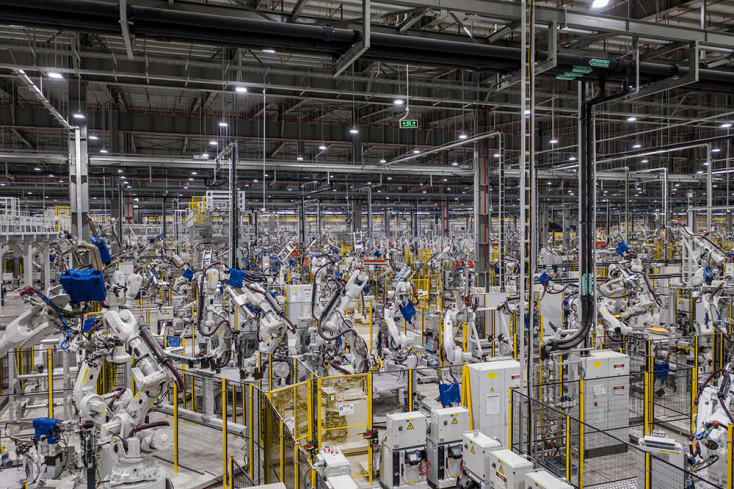
AUTOTECH MACHINERY JSC, Ms. Pham Thi Huong (CEO): Integrated solutions encompassing everything from design support to manufacturing machinery and automation
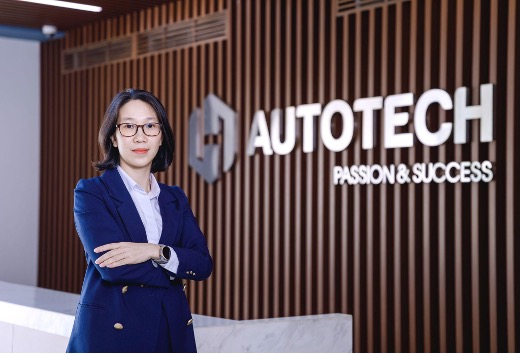
We believe 2025 will be an important year of recovery for our company. The period from 2023 to 2024 was marked by significant market fluctuations, and in 2024 in particular, investment demand slowed as companies became more cautious following the impact of COVID-19. During this time, we prioritized strengthening our governance and improving internal processes, which limited our external business activities to some extent.
Based on this foundation, we reviewed our business strategy, refined our sales and customer engagement approach, and improved cost management. As a result, we restructured our operations and established a clearer recovery trajectory. With the market gradually recovering and key customers resuming investment in production and automation, our sales increased by approximately 160% compared to 2024, marking a strong rebound.
From a broader perspective, automation is no longer optional but increasingly essential. Rising labor costs, workforce shortages, and stricter requirements from global customers are accelerating demand for automation solutions, creating significant opportunities for companies like ours.
Looking ahead to 2026, while market opportunities are expected to grow, we also recognize the need to continue strengthening our internal capabilities. This includes enhancing our sales organization, stabilizing production and operations, and improving quality and on-time delivery performance. At the same time, we will focus on human resource development, optimize workforce allocation, and actively leverage automation and IT solutions to build a more efficient and resilient operation, less dependent on labor fluctuations.
In addition, to better capture emerging opportunities, particularly in high-tech sectors, we believe it is important for Vietnam to further develop a strong supporting industry ecosystem. Strengthening collaboration, quality standards, and responsiveness across the supply chain will enable companies like ours to participate more deeply in high-value manufacturing networks.
BOUSTEAD & KTG INDUSTRIAL MANAGEMENT CO., LTD, Mr. Dang Trong Duc (Director): Precision machining, mold making, plastic injection molding, and automation solutions

The year 2025 was a turbulent one for the global economy, but at the same time, it also presented a great opportunity for Vietnam as the wave of manufacturing relocation, which has been accelerating since 2022. Industrial zones such as Bac Ninh and Dong Nai provinces have been receiving a strong influx of foreign direct investment (FDI) into manufacturing sectors such as electronics, machinery, and industrial equipment. International companies perceived Vietnam as a strategic destination due to its stable political environment, young and competitive workforce, and increasingly sophisticated manufacturing operations.
While the 2025 market presented advantages, challenges also existed. Adjustments to administrative boundaries in some regions led to delays in planning and investment procedures, giving both foreign direct investors and industrial infrastructure developers some leeway. However, demand for environmentally conscious, internationally-standard projects continued to increase, forcing industrial park developers to improve the quality of their products and refine their operating models.
Thanks to consistently attracting high-quality investors in its global supply chain, KTG Industrial has consistently pursued a sustainable development strategy over the past five years. Specifically, this includes incorporating environmentally conscious solutions into projects, raising construction quality standards, and developing multi-story factory models to optimize available space, meeting the standards valued by current manufacturing market and increasingly expected.
As we enter 2026, we are launching a new project with flexible floor space to accommodate diverse production scales, aiming to complement our supply of high-quality facilities from 2026 to 2027. KTG Industrial aims to be a long-term partner in the development of businesses in Vietnam by not only providing production space but also offering a comprehensive support service system and prioritizing the creation of a stable and efficient operating environment suitable for the factory's future expansion needs.
ORISTAR CORPORATION, Mr. Pham Quoc Hung (Chairman & CEO): Non-ferrous metal products such as copper, aluminum, stainless steel, special steels, and tin

As global supply chains continue to restructure, Vietnam is strengthening its position as a key manufacturing and procurement hub. At the same time, requirements for quality stability, precision, delivery reliability, environmental compliance, and traceability are becoming increasingly stringent, particularly among Japanese companies.
In this environment, we are developing our role as a strategic supplier in non-ferrous metal distribution and processing, with long-term and systematic investment as the core of our competitiveness. We are currently constructing our second factory in Ho Chi Minh City’s Hi-Tech Park to expand production capacity and strengthen our capabilities in high-value and high-tech fields.
In production, we operate high-precision slitting, cutting, and milling systems capable of processing ultra-thin materials down to 0.05 mm, supplying to industries such as connectors, automotive, aerospace, and semiconductors. We have established quality and environmental management systems in accordance with international standards, including AS9100, ISO 9001, and ISO 14001.
In management, we utilize ERP-based, AI-driven systems to enhance demand forecasting, inventory optimization, and quality data analysis. We also maintain controlled warehouse environments with automated temperature and humidity systems, ensuring consistent quality from storage to delivery.
We ensure stable supply through a global supplier network and operate specialized teams by industry and market. Our multilingual capabilities and deep customer understanding enable precise and responsive service.
We will continue to invest in technology, management, and human resources to remain a trusted long-term partner for our Japanese customers.
MAKINO VIETNAM, Mr. Nguyen Thanh Hoa (Director): Sales and service of machining centers, milling machines, electrical discharge machining (EDM) machines, etc.
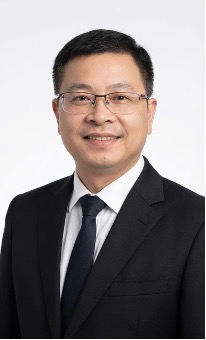
The year 2025 has been a highly significant year for Makino Vietnam. Amid considerable global volatility—particularly the impact of U.S. government tariff policies on the investment plans of many customer groups—Makino Vietnam successfully implemented its operational and business strategies and achieved the objectives that were set.
The inauguration and official commencement of operations of the Makino Hung Yen Manufacturing Plant and Technology Center in December 2025 not only marked an important milestone in the expansion of Makino Vietnam’s operational scale, but also demonstrated Makino’s stronger and long-term commitment to accompanying and supporting customers in Vietnam.
Looking ahead to 2026, the global economic and political environment is expected to remain volatile and uncertain, with potential significant impacts on the Vietnamese market due to the country’s deep integration into the global economy and its increasing reliance on foreign direct investment (FDI).
In this context, Makino Vietnam will continue to focus on investment in human capital development, further strengthening customer support and technology transfer capabilities, while proactively seeking and seizing new opportunities for market expansion—particularly in emerging industries such as aerospace, semiconductors, medical devices, and electric vehicles. We also place high expectations on a stronger recovery in production activities among our Japanese customer base in the coming year, which we believe will have a positive spillover effect on the manufacturing sector in Vietnam as a whole.
CNC TECH THANG LONG, Mr. Nguyen Thanh Trung (Deputy Director): Precision machining, mold making, plastic injection molding, and automation solutions
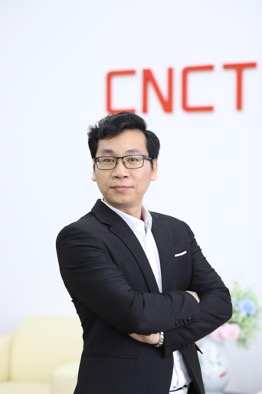
From CNCTech's perspective, 2025 was not only a time of significant change for the mechanical engineering and manufacturing industry, but also a time full of opportunities. With the slow recovery of the global market, coupled with soaring raw material and logistics costs, companies are being forced to optimize their operations. The trend of factories relocating to Southeast Asian countries is becoming increasingly pronounced. Competition for talent, especially skilled professionals, is intensifying. At the same time, the growing demand for automation, precision equipment, advanced processing solutions, and high-quality products has allowed us to rapidly expand our cooperative relationships with many domestic and international customers, including those in the US, EU, and Japan. For CNCTECH, 2025 was a year to strengthen production capacity, build lean management systems, focus on investing in automation and intelligent production management systems, improve professional skills, and invest in new technological equipment to enhance competitiveness.
The market is expected to stabilize in 2026, driven by the restructuring of global supply chains and the acceleration of technological innovation in manufacturing. CNCTECH aims for growth focused on precision machinery products, export parts, and integrated manufacturing services that meet the stringent standards of the high-tech sector. Furthermore, we will expand into promising markets such as Japan, the EU, and North America, focusing on improving our technological capabilities and quality standards and promoting automation.
With the foundation established in 2025 and a clear direction toward 2026 and 2030, we are confident that our business will maintain rapid and sustainable growth and that we can actively contribute to the value chain of the mechanical engineering industry, and indeed to related industries in general.
DIGIWIN VIETNAM, Ms. Daphne Tsai (Deputy General Director): Software development and digital transformation consulting

As the year of 2025 closed, Vietnam's relevant industries presented a multifaceted picture. While the relocation of manufacturing continues, the processing sector (particularly metal and plastic injection molding) is facing challenging issues. Sales may increase, but profit margins are shrinking. Fluctuations in the global economy, US tariff adjustments, and increasingly stringent rules of origin are creating "invisible barriers." If companies do not prepare early, compliance costs and paperwork will become a significant burden.
Looking ahead to 2026, I believe this year will see a sharp increase in polarization. Foreign direct investment (FDI) is clearly shifting towards high-tech sectors such as electric vehicle (EV) components and semiconductors. This presents a golden opportunity for Vietnamese companies to transform from mere outsourcing to Tier 1 and Tier 2 suppliers.
However, the rules of the game have changed. Overseas buyers no longer focus solely on "low price," and the three keywords that will determine orders over the next year will be "stability," "transparency," and "responsiveness." And to achieve this, human experience alone is insufficient, technology is necessary.
As a partner in digital transformation, our direction for 2026 is to transform artificial intelligence (AI) from an intriguing concept into a practical tool in the factory. We encourage and support companies to focus on two key areas: (1) AI in operations management: Using AI to analyze historical data and help business owners accurately predict their raw material needs and offer the most competitive prices while maintaining profitability. (2) Digitalization for supply chain transparency: Transform fragmented data into real-time information. Today's international customers demand remote access and visibility to product progress and quality.
2026 is not the time to hesitate. It is time for manufacturing companies to prove that they are not just low-cost outsourcing factories, but high-tech partners that leverage data and AI to ensure the sustainability of global supply chains.
AU LAC GLOBAL VIETNAM CO., LTD, Mr. Phan Tien Dung (Director): High-frequency induction hardening tools and machines applying automation technology for polishing and deburring molds

In 2025, Aulac Global Vietnam focused on completing a nationwide supply chain for consumables in the mold manufacturing sector. Simultaneously, it also concentrated on the research and development of high-frequency induction hardening systems for the high-tech manufacturing industry.
Overall, 2025 is expected to be a year of significant change globally. The Vietnamese economy is showing strong performance compared to 2024. In particular, the Politburo issued Resolution No. 68 on the development of the private sector. This is seen as a significant turning point, shifting from a view of the private sector as the once "to be encouraged" to be "a driving force for development" , while also establishing a legal framework to support its growth.
Against this backdrop, the private sector, particularly manufacturing and export companies funded by domestic and foreign direct investment, achieved remarkable export figures exceeding $800 billion, surprising many economic experts.
As we enter 2026, despite facing numerous global uncertainties as well as domestic challenges’ pressures such as inflation, exchange rates, and credit, to be expected for decisive government solutions to promote the private sector.
In particular, manufacturing is expected to be the main driving force of the economy, especially in key manufacturing sectors such as automobiles, railways, and aircraft. Vietnam is believed to need large, pioneering companies capable of developing and producing core technologies domestically.
By acquiring core technologies such as automobile engines and electric railways, Vietnam will have the opportunity to build a comprehensive support industry system that can meet domestic demand while expanding sustainable exports.