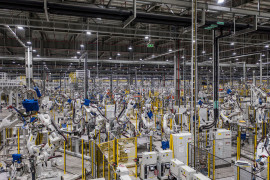


Emidas Magazine conducted interviews with business support organizations and both Vietnamese and foreign-invested enterprises (FDIs) operating in Vietnam to reflect on the outcomes of 2025 and explore the outlook for Vietnam's industrial sector in 2026.

The Office of the Private Economic Development Research Board, Mr. Bui Thanh Minh (Deputy Director): Proposed reforms and policies in the private sector according to the Advisory Council on Administrative Procedure Reform
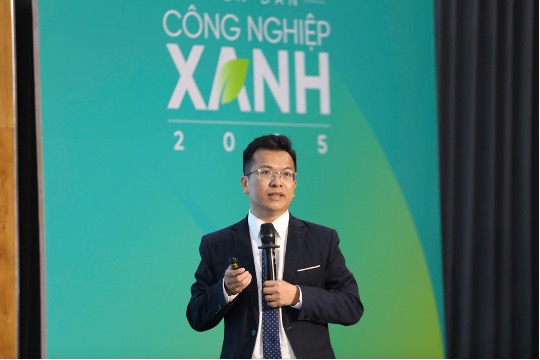
At the end of 2025, the Vietnamese economy has achieved its growth targets despite facing some challenges. GDP growth reached 8.02% year-on-year, with nominal GDP reaching approximately US$514 billion and GDP per capita reaching US$5,026. This has elevated Vietnam to the status of an upper-middle-income country.
Despite ongoing uncertainties surrounding tariffs and changes in market conditions, the industry showed signs of recovery in 2025. In particular, the manufacturing and processing sector recorded strong growth of 9.97% year-on-year, continuing to play a core role in supporting economic growth. The value added of the entire industry also increased by 8.80% year-on-year, the highest growth rate since 2019.
The Industrial Production Index (IIP) also showed signs of recovery, forecasting growth of 9.2% for the whole of 2025. Manufacturing and processing industries are driving overall industrial growth, indicating a recovery in orders and manufacturing activity. This trend is particularly evident in export-oriented industries and sectors related to global supply chains.
On the other hand, there are still challenges, for example, rising production costs and environmental compliance costs, restrictions on private companies' access to medium and long-term funds, and the persistent resource disparity between domestic companies and FDI/state owned enterprises.
The year 2026 will be a crucial milestone towards the period 2026-2030. This will be the time to put policy resolutions into implementation and transform them into tangible results, towards the national goal of becoming a high income country by 2045. The focus in the coming period will be on shifting from a growth model heavily reliant on labor and resources to one centered on science and technology, innovation, and digital transformation.
BK HOLDINGS, Mr. Nguyen Trung Dung (Deputy Director): A practical organization responsible for commercializing technologies originating from Hanoi University of Science and Technology and industrial cooperation

BK Holdings (Hanoi University of Science and Technology) operates as an organization responsible for commercializing technologies developed by the university and bridging the gap with industry. 2025 is the year when the focus shifts more than ever to the "quantity" of research results and patents, and how they are utilized and transferred to society and industry. The attitude of prioritizing utilization over simply obtaining patents is becoming a reality in both educational institutions and industry.
In this context, bridging the gap between research results and the market has become a key issue for our university. Although universities possess numerous research topics and patents, many hurdles remain before they can be commercialized or brought to market, including technical verification, funding, and human resources. The year 2025 has clearly highlighted that we need to reorganize these processes into a systematic framework, rather than addressing them separately.
Looking ahead to 2026, we will seamlessly connect testing and prototyping facilities, intellectual property evaluation and transfer functions, and business development infrastructure, thereby increasing market access for university-developed technologies. The next focus is on creating a cycle that connects previously laboratory-limited research results with technologies used in manufacturing and startups, fostering sustainable business practices.
Universities are not only places where knowledge is accumulated but also where solutions to societal and industrial challenges are generated. As an institution operating at the intersection of these two aspects, our university will continue to expand its role in connecting research results with industry and will fully intensify the efforts to implement initiatives aimed at linking university- born-innovation with employment and industry competitiveness.
GIGAKU Techno Park (Nagaoka University of Technology Office at Hanoi University of Science and Technology), Dr. Hua Thuy Trang (Director of Enterprises Corporation Division): Developing collaborative models between industry, academia, and government to train globally competent engineers

Looking back at 2025, Vietnam has solidified its position as a key innovation hub in the region. Digital and green transformations continue to accelerate, and the demands on professional ethics, ethical standards, and sustainability are becoming clearer in the way companies develop technologies and enter markets.
Based on our experience working with companies and engineering teams in 2025, we understand the following: Smart technologies without a sustainable foundation are only short-term solutions, and green businesses without an ethical foundation are nothing more than "greenwashing" (false environmental awareness).
At GIGAKU Techno Park, we pursue GIGAKU's philosophy of practical science and innovation for social contribution. Looking back on the factual implementation in 2025, the role of engineers is changing. They must not only solve technical problems, but also consider the impact of products on the environment, users, and society from the design stage.
From a strategic perspective, 2025 demonstrated that intellectual property (IP) is not merely a means of protecting commercial interests. When integrated with market strategy, IP will become a mechanism for protecting green technologies, clarifying the origins of innovation, and building a competitive environment based on intellectual capital.
As we enter 2026, the high-tech and green transformation markets are entering a critical selection phase, and technological capabilities must be tested by their ability to create sustainable value. To truly impact the Vietnamese economy in 2026, it is necessary to build a value chain where “technology is a tool, intellectual property is a shield, and ethics are the guide”. On this foundation, companies and engineers are required not only to acquire or to master technology but also to transfer growth into a long-term commitment to resources, the environment, and society.
In particular, by 2026, we will promote the transfer of stringent technical standards from Japan to Vietnam through a collaborative model involving Nagaoka University of Technology, Hanoi University of Science and Technology, and the GIGAKU SDG Institute. This initiative not only goes beyond mere technology transfer. It also aims to spread the spirit of "monozukuri" that reflects ethical values in all high-tech products and services, and to contribute to the development of Vietnam's next generation of engineers and entrepreneurs.
KOBAYASHI CASTING CO., LTD, Mr. Pham Huu Nhien (Director): Precision Stainless Steel Casting using the Wax-Filling Method

2025 is a year in which the global economic outlook is difficult to predict due to the increasingly complex global geopolitical situation and the impact of US tariff policies. As a result, investment activity in general is becoming more cautious, and ordering decisions in different countries tend to be more restricted.
On the other hand, Vietnam, with its young and abundant workforce and political stability, is once again attracting attention as a strategic manufacturing hub. Among foreign companies, there is a growing trend to reconsider production and investment in markets with political risks or markets that directly compete with the United States, and to relocate to Vietnam.
Domestically, policies are being implemented to take advantage of this trend for growth and elevate economic development to a next level. These policies include promoting investment in infrastructure, reducing logistics costs, and simplifying administrative procedures through restructuring at the provincial and municipal levels, as well as deploying highly qualified personnel to local governments.
For KOBAYASHI CASTING, 2025 was a year of valuable insights in reviewing business strategies to prepare for the production shifting and changes in the economic environment from 2026 onwards. Although confirmed orders for 2025 only accounted for about 70% of the total, we received numerous requests for quotations from new customers in the US, Europe, and Japan through exhibitions organized by NC Network and via the internet.
Currently, we are focusing on improving production processes and investing in technology, while also developing our sales system and training staff to meet the demands of new markets.
We anticipate 2026 to be a year of expanding business opportunities in the wax casting industry. To seize these opportunities, we will build a multi-country procurement system and develop a system that prioritizes supply chain risk management.
NISSIN ELECTRIC VIETNAM CO., LTD, Mr. Kaoru Terao (General Director): Metal sheet production, cutting and assembly; Electroplating and PVD Coating Services
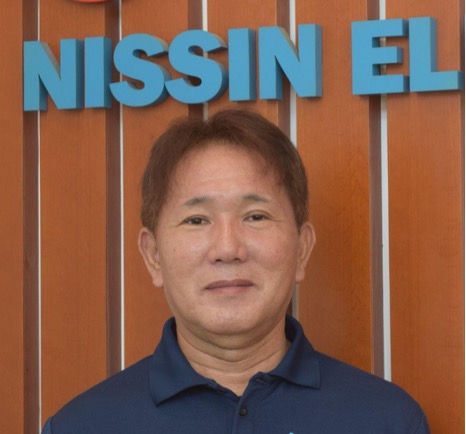
Our company provides metal processing services in various fields, but we receive many orders from clients related to the semiconductor industry. The past five years since the COVID-19 outbreak in 2020 have been very volatile. In 2020, orders decreased, but from the second half of 2021, orders from semiconductor-related companies surged due to the increase in remote work, and we operated at full capacity even on weekends. However, due to inventory adjustments in the semiconductor industry, orders decreased from the second half of 2022, and in 2023, sales plummeted to 50% of the previous year. Fortunately, orders have gradually recovered since then, and by 2025, sales had recovered to approximately 80% of their peak.
About 30% of our factory's output consists of mass-produced products, with the remainder being project-based, processing 3,000 to 5,000 new drawings daily. This makes production and quality control extremely challenging. Since the COVID-19 pandemic, when order volumes were insufficient, we viewed the reduced output as an opportunity and redoubled our efforts to improve our company's systems and train our staff. We implemented numerous improvement activities both in the office and at the factory, and employees actively participated in training sessions to enhance their skills. As a result, compared to pre-COVID-19 levels, we have been able to increase productivity by 1.5 times by 2025 and reduce the error rate to 1/10. Our ability to respond quickly to customer demands and the quality of our products are now highly valued by many customers.
We believe that 2026 will be a year of preparation for a major leap forward for the company. Although the weakening yen has made securing orders from Japan significantly more difficult, orders from customers in Europe and the United States are steadily increasing. We will further refine the internal improvement projects we have undertaken over the past five years, and all employees will work together to develop into a company that can bring joy to even more customers.
EASTERN SUN VIETNAM, Mr. Dao Quang Dung (CEO): ERP software consulting and provision
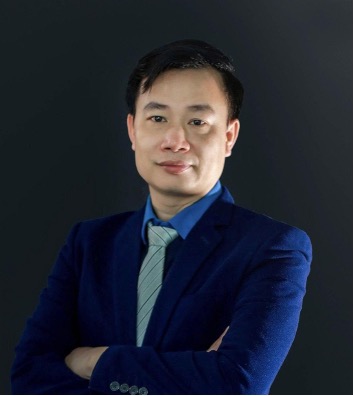
While 2025 saw significant changes for the manufacturing sector, particularly the processing industry, many positive signs were also observed. Global economic uncertainty led to fluctuations in raw material prices, logistics costs, and export standards, putting pressure on profit margins. The processing industry also faced challenges such as the shortage of skilled workers, the demand for product traceability and safety, and pressure for automation across the entire production chain.
However, positive factors include the recovery of regional markets, the continued inflow of foreign direct investment into Vietnam, and the proliferation of digital and automation solutions that are giving factories opportunities to upgrade their operating models. Companies that invested early in digitalization systems such as IoT, MES, energy management, and lean manufacturing methods maintained steady growth in 2025. Looking ahead to 2026, the manufacturing sector is expected to be brighter as the macroeconomic environment gradually stabilizes and international consumer demand is expected to increase slightly.
Opportunities are opening up for companies that know how to leverage digital transformation, especially those working on data connectivity across their entire factory, automation of production lines, and the construction of internationally standardized management systems. The trends of "smart manufacturing" and "green factories" will set new standards of competition, requiring companies to improve productivity, optimize costs, and ensure supply chain transparency. In 2026, many companies aim to focus on three key areas: (1) Restructuring business processes toward standardization and digitalization; (2) Investing in equipment and technology to enhance manufacturing capabilities; (3) Building technical teams with a data-and-technology driven mindset. Overall, 2026 is expected to mark the beginning of a sustainable recovery phase in manufacturing, with a clearer transition toward the smart factory model in Vietnam.
INTECH GROUP.,JSC, Mr. Hoang Huu Yen (Director): Conveyors, rollers, industrial automation systems and solutions
One of the key features of the market in 2025 is a more robust and systematic surge in foreign direct investment (FDI), particularly in Japanese companies. Many companies are expanding existing plants or launching new projects in the electronics, automotive, and food and beverage sectors. The demand for automation is no longer experimental. It has become a necessity in strategies for improving productivity, quality control, and reducing reliance on manual labor in factories. Investments in solutions such as conveyor belts, industrial robots, AGV/AMR systems, and production management and monitoring systems are becoming increasingly systematic while highly demands for quality, return on investment, and after-sales service
The year 2025 presented both clear opportunities and numerous challenges for manufacturing companies. Intensifying price competition with overseas suppliers was a major concern, material and component costs remained volatile while customer demands, particularly from Japanese companies, are becoming increasingly stringent regarding quality, safety, delivery time, and long-term system stability.
In 2025, our company invested in building its third factory in VSIP, Bac Ninh province, to expand its production capacity. Recognizing that human resources are a crucial element in ensuring the quality of its products and services, Intec also focused on improving the capabilities of its technical team.
Entering 2026, the prospect for the manufacturing and automation industries is considered bright, moving towards more sustainable and selective growth. While the continued expansion of investment from Japan will create many opportunities, Vietnamese companies will need to strengthen their technological capabilities, standardize project management, and cultivate highly specialized engineering talent. This period is one in which the quality of solutions, reputation, and long-term vision will be key to companies solidifying their position in the industrial supply chain.